Convention Centre · Public Sector · Large-Scale Events
CTICC
Food & Beverage Transformation at Institutional Scale
Summary Statement
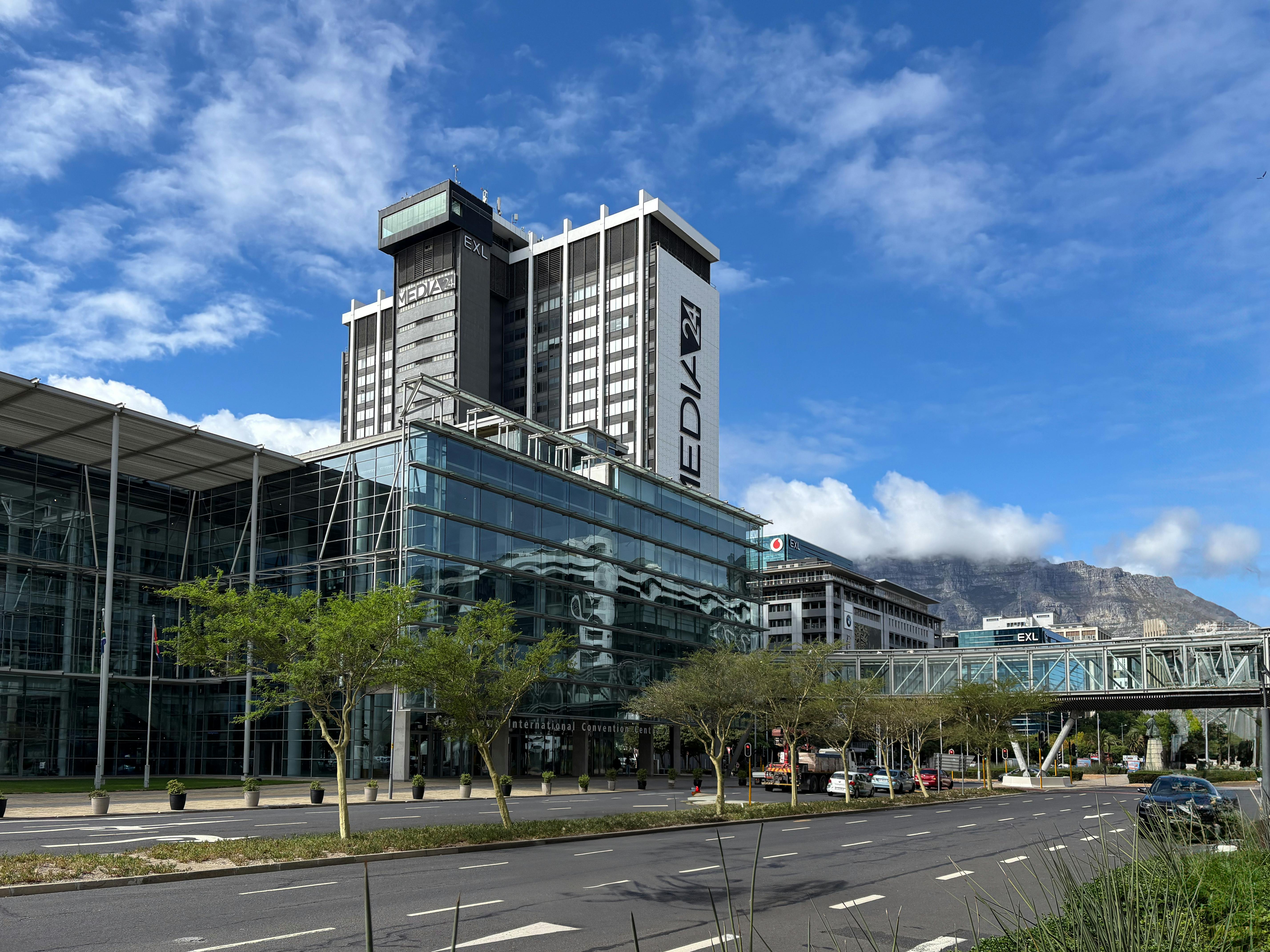
The Cape Town International Convention Centre was not a normal hospitality venue. A five-star graded, 140,000 square metre facility operating 500+ events per year — government-linked, publicly accountable, and entering the most important expansion in its history. I joined as Food & Beverage Controller in September 2015 and was promoted to lead Beverage and F&B Outlets division in March 2016, taking on the mandate to professionalise systems, restructure the department, and build operational readiness for the CTICC 2 expansion — while running one of Africa's most complex live hospitality environments.
The Mandate
Restructure the beverage department into a scalable, accountable operating model with clear talent pathways. Deliver public F&B insourcing and cashless payment innovation at the Cape Town International Jazz Festival — 30,000+ attendees, 800 staff, zero margin for operational failure. Support F&B pre-opening readiness for the $55 million CTICC 2 expansion, including $3.5M+ in equipment procurement, kitchen and back-of-house layout design, and operational commissioning under live-event conditions.
Strategic Insight
Institutional hospitality operates where commercial performance, public accountability, procurement compliance, political stakeholder management, and live-event delivery intersect simultaneously. The disciplines that make a luxury venue excellent — systems, talent, stock control, guest experience — are the same disciplines that make a convention centre trustworthy. CTICC proved that operational rigour at scale and human hospitality are not in tension. They are the same practice, applied at a different magnitude.
Key Metrics
$15M+
F&B revenue milestone
30,000+
Jazz Festival attendees
9% under
Operating budget
Outcomes
BRAND
CTICC maintained its five-star South African Tourism Council grading throughout the expansion period. Customer satisfaction index held at 84% across the 2016/17 reporting year per public annual reports. The centre reinforced its position as Africa's leading convention facility through operational consistency during one of the most complex expansion periods in its history. The beverage collection was repositioned around South African product storytelling — local wines, craft spirits, fair trade partnerships, and arrival cocktail experiences that elevated the guest journey across all event formats.
OPERATIONAL
The beverage department was restructured into three distinct functional areas: Beverage Service, Beverage Control, and Beverage Store — with new key positions created for CTICC 2 readiness. Labour broker dependency was reduced through permanent employment pathways and structured development programmes. A full Jazz Festival operating model was built from scratch: six months of planning, 800 staff recruited and deployed, a 300+ bar team, and a six-week beverage service training programme. In 2018, a cashless payment system was implemented across all public festival bars — reducing cash-handling risk, improving transaction visibility, and strengthening stock-to-sales reconciliation. CTICC 2 was commissioned under live-event conditions: contractors moved out, operations moved in, and events ran while final snagging continued.
DIGITAL
The 2018 Jazz Festival cashless transformation required cross-functional project delivery across IT, finance, procurement, security, and an external technology provider — all under compressed timelines and presidential security protocols. Cashless wristband and POS infrastructure was specified, procured under deviation approval, and deployed at scale across a 30,000-attendee public event, making CTICC one of the first convention facilities in Africa to operate a fully cashless major public F&B event. Integrated stock control systems and digital asset tagging were implemented to improve inventory accountability and procurement visibility. CTICC also became the first facility in South Africa to achieve ISO 22000 Food Safety Management certification during this period.
COMMERCIAL
F&B revenue exceeded $15 million for the first time in the CTICC's history. F&B costs were maintained 4% below budgeted targets. Overall operating costs finished 9% under budget. The 2016/17 public annual report records R209M total revenue, R57M EBITDA, R67M operating profit, 504 events, and an 84% customer satisfaction index. CTICC 2 capital expenditure reached R380.3M with a 90% CAPEX spend KPI achieved. $3.5M+ in F&B equipment tenders were scoped, specified, and procured for the new facility. 92.8% B-BBEE procurement spend and 6.4% of salary costs invested in training were recorded for 2016/17.
CTICC proved that hospitality leadership at scale is not about choosing between creativity and control. It is about building systems strong enough to allow both to move together.
The brief was to build an F&B operation. What we built was a platform — for people, for performance, and for scale.
Confidentiality Notice
This case study is a professional portfolio summary based on my role, leadership contribution, and project involvement. It does not disclose confidential company information, proprietary information, trade secrets, guest data, supplier information, internal intellectual property, or commercially sensitive operating materials. Financial and operational outcomes are presented in broad ranges, percentages, or directional terms for context only. Brand names are referenced solely to identify the professional environment in which the work was performed, and no endorsement, affiliation, or authorization is implied unless expressly stated.